


Most of us would agree that data can help in solving some of our world’s problems. For example, I was just talking to a friend of mine about its relevance in fixing healthcare inefficiencies and aiding drug development, but when I mentioned that I had watched this TED Talk once about how data can help lessen world hunger, she didn’t believe me. She claimed that this usage of data seemed a bit too direct (and therefore must be exaggerated), unlike the other more abstract things we had been discussing. But it’s true! Believe it or not, we can use data to achieve results as tangible as feeding people.
As Mallory Freeman explains in her TED Talk (“Your company’s data could help end world hunger” by Mallory Freeman, September 2016), one of our biggest problems regarding food distribution and management is that there are way too many decisions to make (see below), and human beings alone (without the assistance of technology) cannot possibly make all the right choices. And that’s not a slap on the face to humans…it’s just an honest recognition of our limits.
An (abbreviated) list of the many questions that need to be considered about food distribution and management:
- What food to buy?
- Where to buy it from?
- Where to store it?
- How long will it take to get there?
- How should it get there? (transportation routes)
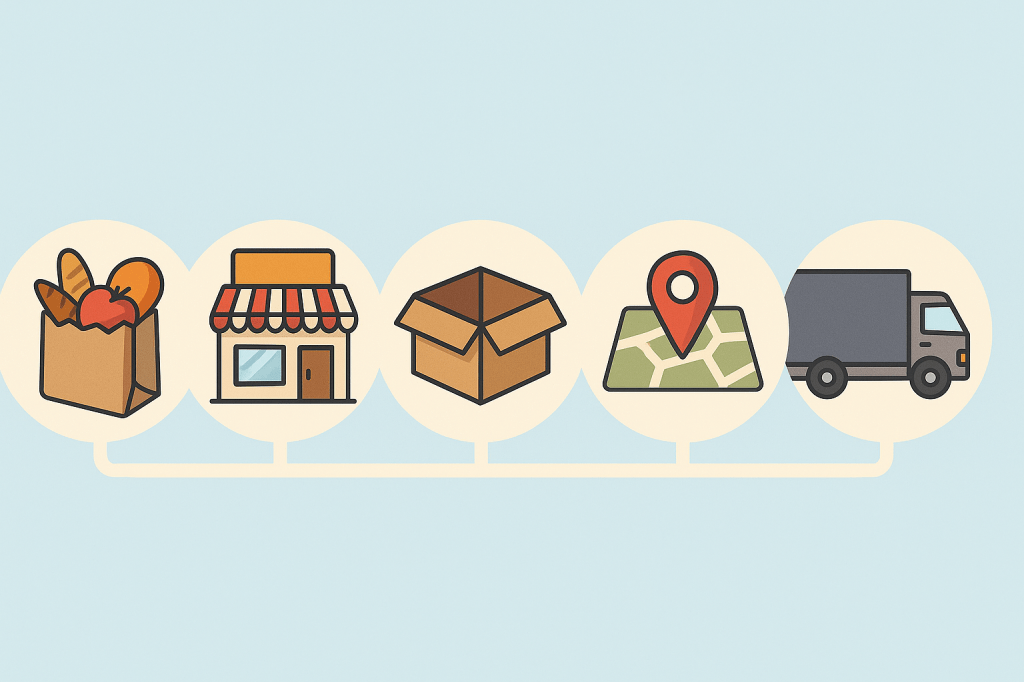
Think about how many foods there are in the world (regarding question #1). Now think about the sheer number of possibilities in answers to questions #2-4 for each food you answered in question #1. The combinations of decisions grows exponentially, until answering questions accurately becomes impossible for the average human being.
But Freeman had the idea to let data make the decisions for her. By collecting data and training a model, she was able to cut food distribution and management costs by 17%, speed up decision-making, and had the ability to feed an additional 80,000 people. Isn’t that insane? That’s 80k more people with food and 80k less people going hungry!
As Freeman explains, the more data we have out there, the more people we can help. Whether with the goal of ending world hunger or addressing another issue, data is the next step in making better decisions. She goes on to explain how one group of individuals, however, are failing to contribute to this crucial next step: corporations. If they were to engage in what Freeman calls “Data Philanthropy,” we would be able to bring data into decision-making with more speed and accuracy.
But what exactly does “Data Philanthropy” mean?
Data philanthropy is when private companies donate corporate data (for the advancement of a public cause). According to Freeman, data philanthropy consists of three criteria:
- Donating data – Perhaps the most obvious, but important nonetheless. Of course, a major consideration in this is to ensure that all data is properly anonymized; the goal isn’t to diminish privacy but to use data for the greater good. For example, data pings to cellphone towers can be used to track the spread of infectious diseases like malaria, helping to stop outbreaks before they even occur.
- Donating decision scientists – There is a lack of decision scientists as it is, and those that are present often choose to work in corporate over public service/research. Now, you might be asking: why should a company sacrifice their own employees’ time for causes unrelated to their business? The good news is that the “sacrifices” don’t have to be huge: just 1-2 hours per month of a corporate decision scientist’s time, over years, would be more than enough to form long-standing relationships to humanitarian causes.
- Donating technology to gather new sources of data – After all, who has better technology than data companies in the private sector?

Through these three initiatives, we can work on using data to solve real world problems both faster and more effectively. Freeman’s project helped feed 80,000 people. Just imagine what can be done with the backing of data from big companies like Google or Amazon…improved cancer treatment? lessened pollution? better control of disease? Let’s find out.
 Aanya Shridhar
Leave a comment